
Decarbonising Belgium: Bridging Silos, Building Futures
Swifft Collective launch event
3 December 2025
On 3 December 2025, the SWIFFT Collective held its launch event at the iconic Flagey, Studio 4. This unique moment brought together members of the Collective, researchers from across Belgium, organisations working on climate, energy, and the social economy in Europe, as well as public institutions from Belgium to the EU level.
Through a two-hour programme combining dance, live music, research panels, and presentations, the event showcased the core values of the SWIFFT Collective: transdisciplinary research and systemic perspectives on climate and energy challenges.
Cathy Macharis and Alessandro Parente opened the evening with a powerful message:
“We are dealing with wicked problems: complex, interconnected challenges that no single discipline or perspective can address alone.”
The launch event was itself a reflection of what the Collective seeks to build: bringing together academia, the arts, grassroots organisations, research, and storytelling, and showcasing transdisciplinarity in action.
Presentation of the Collective
The presentation of the Collective was an opportunity to welcome all professors on stage. Each, an expert in their field, shared their vision of working within a collective and of adopting systemic approaches from their respective disciplines. Different perspectives and methodologies emerged, but with a shared conclusion: the urgency of collaboration and of bridging academic silos in times of profound societal and ecological change.
Research Panel
A central moment of the evening was a discussion between the Swifft Collective four Chair holders: Kimberley Vandenhole, Alberto Procacci, Aurore Fransolet and Laura Deruytter.
The debate, harvested live by visual artist Silvia Alba, highlighted both the diversity of their approaches and the productive overlaps between them. Difference was framed not as a challenge to overcome, but as a resource; allowing each perspective to act as a mirror for the others and fostering reflexivity around methods, questions, and positionality. The discussion explored what can be learned across fields, from whose voices are heard in research and how knowledge is communicated, to the importance of self-reflexivity and experimentation in opening up new ways of seeing and doing research.
The panel also revealed concrete synergies around shared concerns, including uncertainty in decarbonised futures, systemic approaches to socio-technical challenges, social justice as a core dimension of decarbonisation finance. While acknowledging the importance of technology in the energy transition, the speakers stressed that it will not be sufficient on its own. Instead, they called for questioning foundational concepts such as “growth” and “sustainability”, and for addressing the energy transition as a fundamentally social challenge, one that requires holistic and transdisciplinary approaches.
Islands of Hope programme
The launch event was also the occasion to present the Islands of Hope seed funding programme. Cathy Macharis and Alessandro Parente introduced the concept to the audience, highlighting them as key spaces for experimentation and collaboration. Through the Swifft Collective’s seed funding programme, seven projects were selected in 2025, all presented in a film by Bloem Loete, screened during the conference.
Arts and Science
This launch was far more than an academic gathering, and working with dancers, musicians, and artists was a way of articulating a new narrative around transdisciplinary research.
For the Swifft Collective, art and artists play a key role in research, specifically on topics as charged as climate, energy, and social justice, by enabling new forms of communication. They bring experience and meaning to research, reintroducing the emotional dimension necessary for profound societal change.
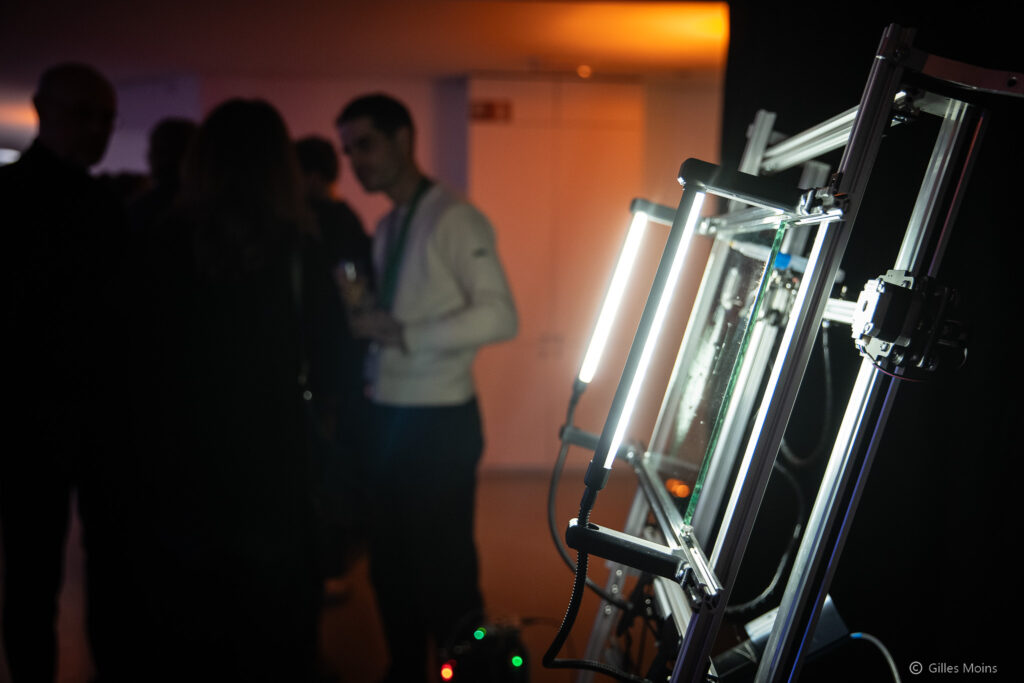
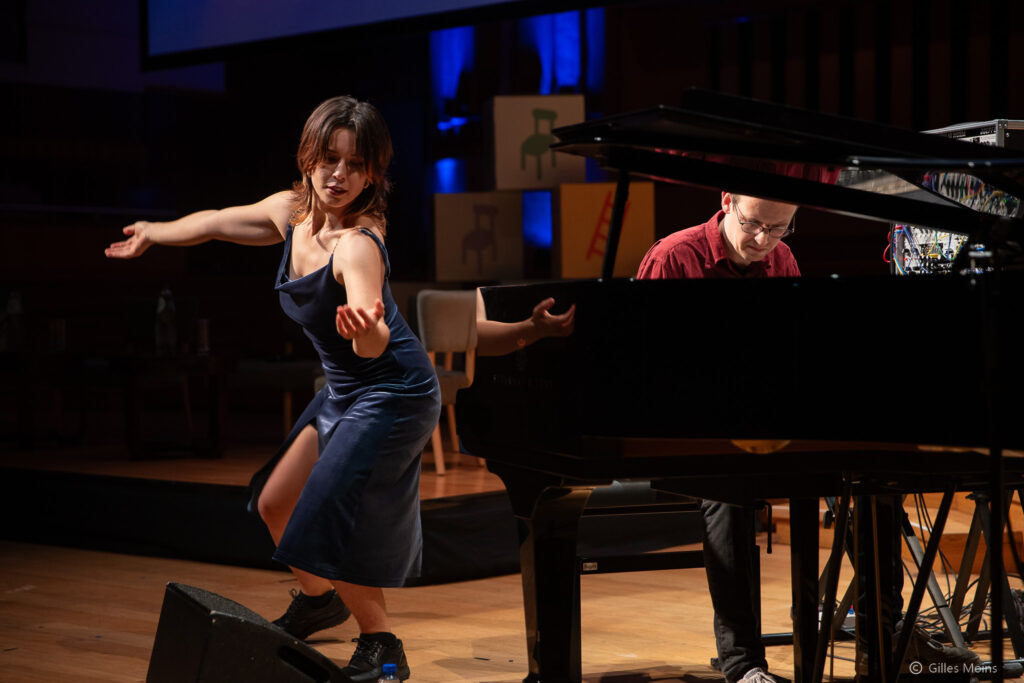
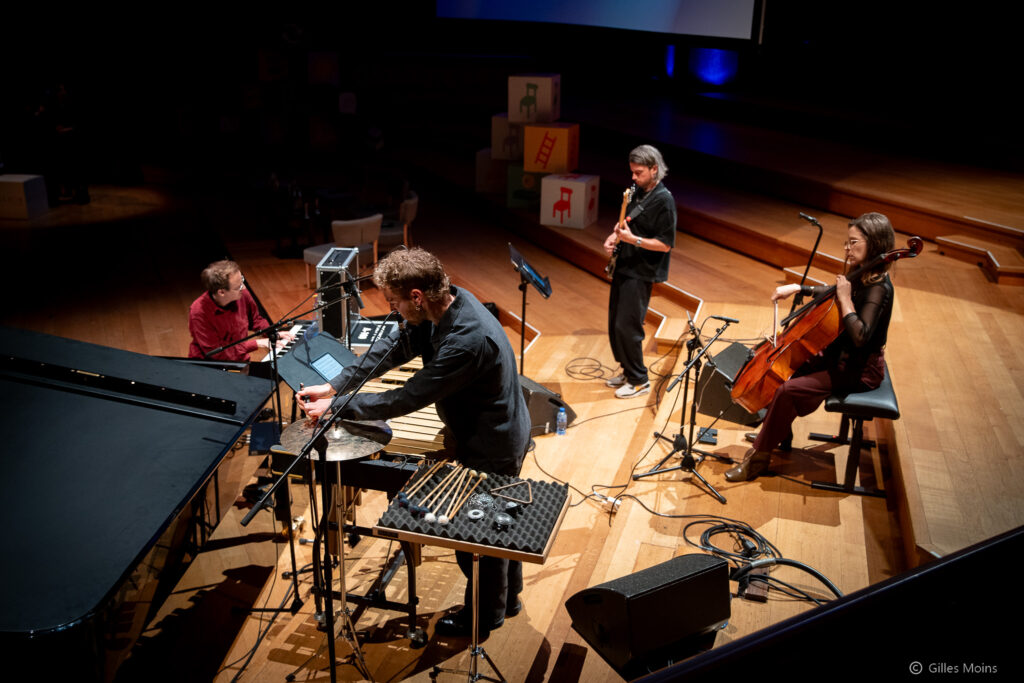
Mirek Coutigny and his band performed an original musical creation translating polarisation into unity, while choreographer Laura Loreley danced in the interludes. In collaboration with Ohme, designer Guillaume Slizewicz displayed Carbon Technostructure, an art–science research project and interactive installation developed with Gijs de Heij.
This transition is not only about technology or innovation, but also about how we think and how we collaborate. The launch event opened new connections between academic, artistic, and societal spheres, with a clear purpose: to foster multiple, systemic, and equitable approaches to the ecological transition.
Structured around four thematic areas and supported by a growing network of collaborators, the Swifft Collective is committed to contributing to the emergence of a low-carbon society by addressing technological, societal, and financial challenges in Belgium and beyond. Through transdisciplinary research, public engagement, and collaborative learning, the Collective explores alternative pathways for social and ecological transformation.
Looking ahead to the years to come, the Swifft Collective will expand its activities across its core pillars, including transdisciplinary research chairs spanning anthropology, economics, engineering, and justice, as well as seed funding through the Islands of Hope programme, supporting projects that connect academic research with on-the-ground action.
Thanks to the Flagey team for their help in the organisation of this event.
Graphic designs and Islands of Hope film: Bloem Loete
Photos: Gilles Moins
Choreography and dance: Laura Loreley
Original music composition and live performance: Mirek Coutigny & band
MC: Magali Minet
Short film by Joséphine Lemaire and Marcus Mellerin, ULB students in journalism