Eat More Trees • Documentary screening
USquare - 5 May 2026
Open to all - registration mandatory
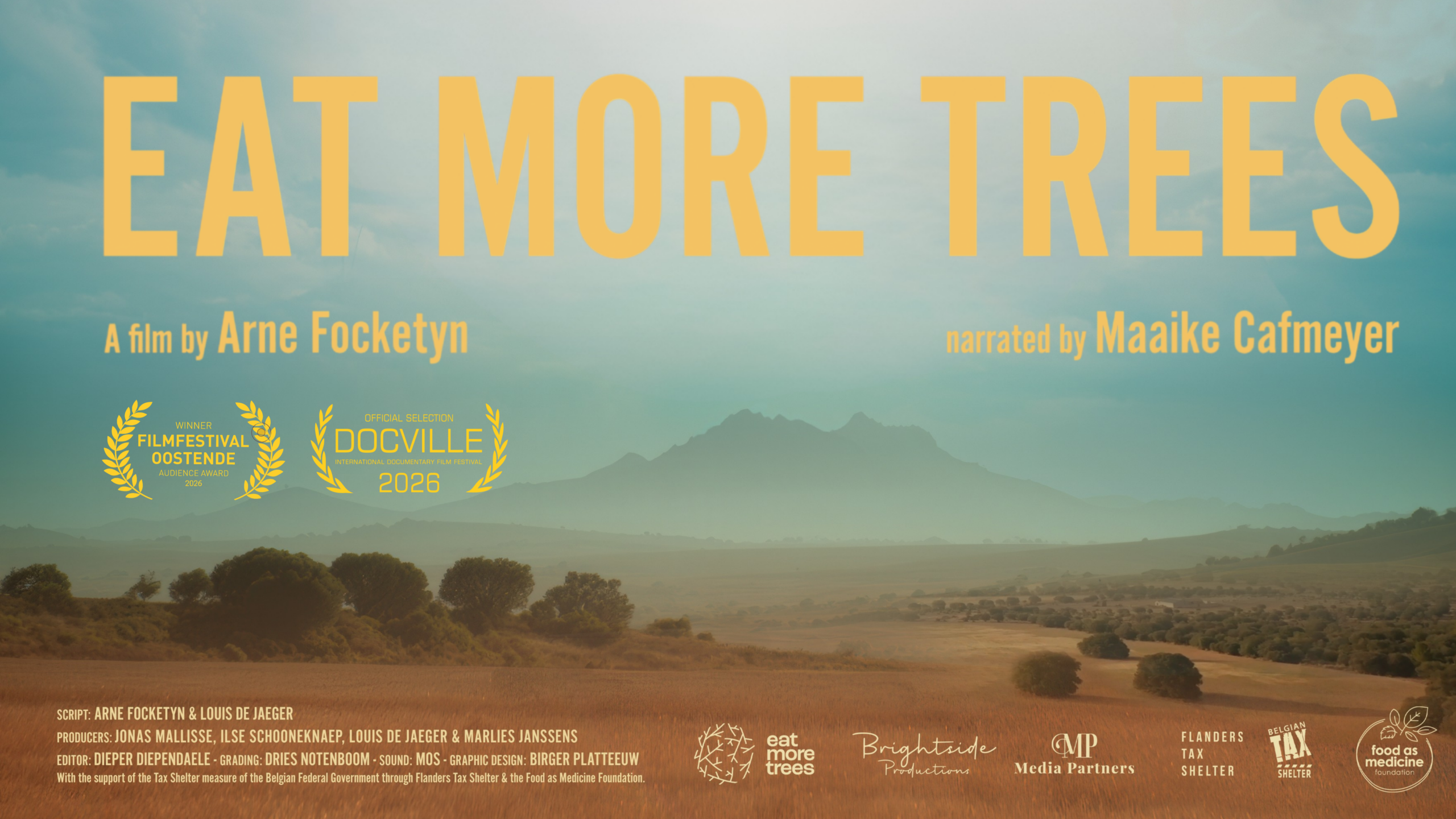
Free screening of Eat More Trees, a film by Arne Focketyn at USquare, followed by a panel discussion.
 5 May 2026
 17:00-19:00 – Film screening followed by panel discussion
 USquare – open to the public – how to get to USquare
What is the power of agroforestry and alternative agriculture ?
Their dream? To fill supermarkets with healthy and diverse products from agroforestry. Is this a utopian vision, or will they succeed in becoming a catalyst for lasting change? After all, reviving agriculture can save entire villages from neglect.
The film intertwines the personal stories of Alfonso, Yanniek, and Louis with broader, universal themes of regeneration, environment, sustainability, and humanity’s connection to the earth. We witness their daily struggles, their triumphs and setbacks, and the growing impact of their work on their communities. Their paths cross when they decide to collaborate and share their knowledge.
Presented by the Swifft Collective’s Chair in Sustainable Transformations and Wellbeing, this film showcases how sustainability transformations take shape through people doing things otherwise – and through practices that reconnect with land and with each other.
The screening is free and open to all, but registration is mandatory.
Panelists
Panel moderated by Kimberley Vandenhole, principal investigator of the Swifft Collective’s Chair in Sustainable Transformations and Wellbeing.
Jan Pille - Farmer
In Ossel (Merchtem, near Brussels), Jan Pille and his wife are fulfilling a promise they made to themselves and their children: to leave behind one hectare of land in better condition than we found it. On that piece of land where they also live, they started a food forest and agro-ecological project in 2018. They named it Otium, an ancient Roman concept that emphasises the importance of stillness and observation.
In addition to developing the food forest and running courses, Jan also works with Brussels Environment on the Brussels Good Food Strategy. This strategy aims to make our food system – the chain from production to consumption – more sustainable in accordance with agro-ecological principles.
Fien Debusschere - PhD researcher on food forests
Fien was born and raised in Brussels and has a great passion for nature. She studied Ecology and Biodiversity at the Vrije Universiteit Brussel and subsequently began a FWO-funded PhD as a doctoral student within the WILD research group.
With a brighter future in mind, she is investigating the potential of ‘agriwilding’ as an alternative agricultural system in which nature restoration goes hand in hand with food production. She focuses on the natural presence of antagonistic communities in the soil of wild, perennial food production systems, that can balance pest pressure. The aim is to create self-sustaining and biodiverse food production systems, with a positive influence on people and the environment.
Marin Vandamme - Co-founder of The Protein Project
Marin co-founded The Protein Project to turn polarised food debates into practical collaboration. Drawing on his work at McKinsey — including shaping Tanzania’s national agri-strategy — and on his role on a cooperative farm board, he focuses on protein diversification that balances farmer income, strategic autonomy, environment, and health.
Marin unites unlikely partners, creating space for nuance, shaping a protein future that works for everyone.
Kato Van Speybroeck - human geographer and anthropologist
Kato Van Speybroeck is a human geographer and anthropologist who is interested in exploring how human-environmental relations are shaped and governed in an urban context.
In her PhD, she examined environmental activism through everyday practices, forms of knowledge, and discourses that influence the way various urban actors engage with contested green spaces. Currently, she is a social geography lecturer at the University of Utrecht.