
Climate, Risk and Finance
Knowledge Ecosystems for Climate Action
Seminar report - 7 April 2026
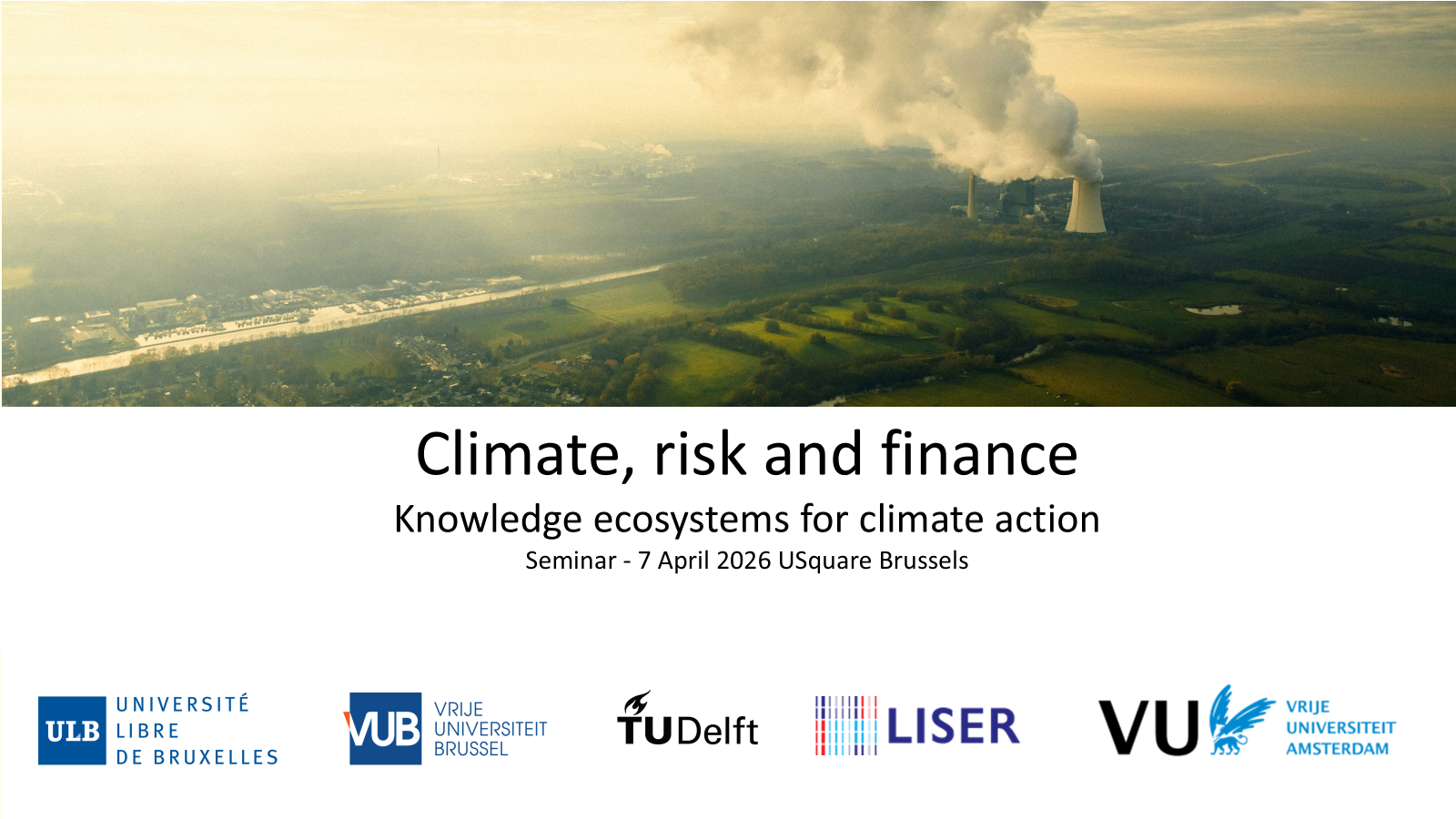
When heavy rains cause homes to flood, do insurers bear the costs? When heat stress makes neighbourhoods unlivable, are local governments left with the bill? When economic value chains become unstable, will companies still invest?
These questions were at the heart of this seminar Climate, Risk and Finance – Knowledge Ecosystems for Climate Action, hosted by the Swifft Collective Chair in Decarbonisation and Finance, in collaboration with TU Delft, VU Amsterdam and the Luxembourg Institute of Socio-Economic Research (LISER).
The seminar brought together banks, insurers, academics, policymakers and civil society actors to explore a shared challenge: how to organise knowledge, responsibility and collaboration in ways that can unlock climate resilience financing across the local, Benelux and European scale.
The event opened with a simple observation: many actors are already involved in climate finance initiatives at EU, national or sectoral level. Yet these initiatives often remain fragmented, with limited opportunities to compare experiences and build a shared language, learn from one another. At the same time, “knowledge ecosystems” are increasingly described in EU policy circles as critical infrastructure for climate action, even though what they require in practice is not always clear. The seminar therefore asked not only what climate resilience financing should achieve, but also what kinds of knowledge infrastructures are needed to make it possible.
Connecting knowledge networks
A central aim of the seminar was to better understand how different knowledge networks can be connected. Academic researchers can contribute by generating evidence, bringing insights from other settings and translating findings across policy, finance and civil society. These aims are at the heart of the Chair in Decarbonisation and Finance (VUB-ULB) and our co-hosting peers in the Netherlands and Luxembourg.
The seminar opened with reflections by Dr Laura Deruytter, principal investigator of the Chair (VUB-ULB), on current experience in Belgium. Several Belgian actors are already taking climate risk more seriously: banks are adopting risk assessments, cities are seeking instruments to finance nature-based solutions, and policymakers are integrating climate risk into resilience planning. These initiatives are valuable, but they also raise a recurrent concern: the landscape remains fragmented and many actors lack a long-term and multi-lateral space, in which to connect their work.
There are promising examples of how these hurdles can be overcome. In the Netherlands, for example, the Dutch Central Bank hosts the Platform for Sustainable Finance, including dedicated work groups. Within the work group on climate adaptation, finance sector actors work with national and local policymakers and scientists on concrete pilot projects. Dr Zac Taylor, assistant professor of Urban Development Management at TU Delft, reflected on how this cooperation structure creates a dedicated, safe space for stakeholders to dive deeper, co-define finance challenges, and pioneer new public and private finance and governance arrangements. Science supports in several ways: as an honest broker, trusted confidant, and critical friend. The result: novel ideas for jointly financing climate-ready housing and neighbourhood transformation in vulnerable historic cities.
For that reason, the Chair teamed up with peer initiatives in the Benelux to convene academics, policymakers, financial actors and civil society organisations and to exchange experiences on such multi-stakeholder knowledge production and collaboration. As Benelux countries, we have the unique opportunity to learn from each other. With its density of institutions and cross-border dynamics, the Benelux can serve as a policy laboratory for building knowledge infrastructures that may also inform wider European approaches to climate resilience financing.
By bringing Benelux and EU experiences, networks and people into conversation, the seminar aimed to make the idea of knowledge ecosystems more concrete – and explore how they might be taken to the next level.
Risk ownership and the urgency to act now
The first session framed the stakes clearly. Bouke de Vries, independent finance expert invited to the EU Reflection Group on Mobilising Climate Resilience Financing, and Dr Jan Brusselaers, assistant professor in Environmental Economics at VU Amsterdam and one of the authors of the EU Climate Risk Assessment (EUCRA), outlined where the EU currently stands. Their message was clear: the window to build resilient systems is measured in decades, not years.
One central challenge is sustaining political momentum over the long term and keeping stakeholders – policymakers, financial institutions, businesses, and citizens – involved, a notoriously difficult task given electoral cycles and shifting priorities. The discussion suggested that strategies for moving forward lie in the interaction between concepts, networks and timing. One key concept highlighted was ‘risk ownership’, which helps clarify who owns the risk, who has the mandate, and who has the responsibility and resources to do so. Building and negotiating this shared language is essential if different actors are to understand both their own role and the benefits of collaboration.
Networks are equally important. The kinds of platforms and groups in which both speakers are involved can help move the conversation beyond familiar audiences and bring in actors such as businesses, who are essential for turning climate resilience into actionable solutions. Finally, timing matters: knowledge has the greatest impact when it reaches policymakers at moments when governance plans, investment priorities and institutional agendas are still taking shape.
The Benelux as a laboratory for Europe
The second panel zoomed in on the national and regional scale, bringing together Gijs Kloek from Achmea and the DNB Working Group on Financing Climate Adaptation, Dr Sabine Dörry, who contributed a research perspective on Luxembourg’s climate policy landscape, and Gregory Truong from the Belgian Climate Risk Assessment Centre (CERAC). Each speaker highlighted diverse ways in which knowledge on climate, risk and finance is commissioned, produced, organised, and shared for policy and practice. Some initiatives are voluntary and emerge from the financial sector, while others emerge from research or through climate legislation, for example. There are also crucial differences in mandates and targets: advising strategy national policy developments requires a different touch than operationalising new place-based financing arrangements, for example.
Despite these differences, the discussion pointed to a shared tension: across the Benelux, political momentum around climate resilience appears to be weakening at the national level, even as the need for action continues to grow. Each country faces the challenge of defining its own national security priorities, while also drawing on EU institutions and frameworks to sustain ambition and coordination.
The panel also highlighted a structural challenge in coordinating climate-related knowledge across policy, finance and research. Drawing on the case of Luxembourg, Sabine Dörry showed how climate advice operates within a highly specialised national ecosystem, where the finance and legal sectors play a particularly prominent role. Her contribution pointed to the need for stronger bridges between scientific expertise, public policy, and key economic actors, especially in contexts where institutional, thematic, political or sectoral silos can limit the effective financing and governance of climate risk.
Breaking down silos: barriers and pathways
The conversation then moved into smaller breakout groups, where participants drew on their professional backgrounds in insurance, banking, academia, public policy and civil society. The discussions asked what participants recognised from the panel contributions, what they would add from their own experience, and what this revealed about the conditions needed for stronger knowledge coordination. In this sense, the Benelux served both as a case study and as a mirror for broader European challenges.
Several structural barriers were identified: a mismatch between the timeframes of financial instruments and the long arc of climate resilience; administrative and geographical fragmentation; gaps in professional education and shared understanding; and a persistent responsibility gap between those who own a risk, those who have a mandate to act, and those who ultimately bear the cost.
At the same time, possible pathways also emerged. Participants pointed to the value of networks that bridge actors across sectors; reforms to capital and market rules, including capital requirements, the EU taxonomy, and insurance frameworks; stronger internal coordination through shared language and common resources; better external communication through stories, narratives and financial literacy; and the importance of making risks visible, before they become damage.
Together, these discussions helped clarify what knowledge hubs need to do: connect fragmented actors, translate knowledge across professional boundaries, and create a durable space for shared learning and coordinated action.
Toward a knowledge hub in Belgium
What emerged from the day was a clearer sense that climate resilience financing is not only a question of instruments, capital or regulation. It is also a question of coordination: who produces relevant knowledge, who uses it, who translates it across sectors, and where different actors can meet regularly enough to build trust, shared language and joint capacity.
For Belgium, the seminar gave momentum to further develop the idea of a national knowledge hub. Such a hub would not need to replace existing initiatives. Rather, it could help connect networks, make knowledge more visible and usable, and create a platform for developing next steps.
By the close of the day, that possibility felt less abstract. The seminar showed both the need for such a space and the foundations on which it could be built. This is the direction we hope to take forward in the near future.
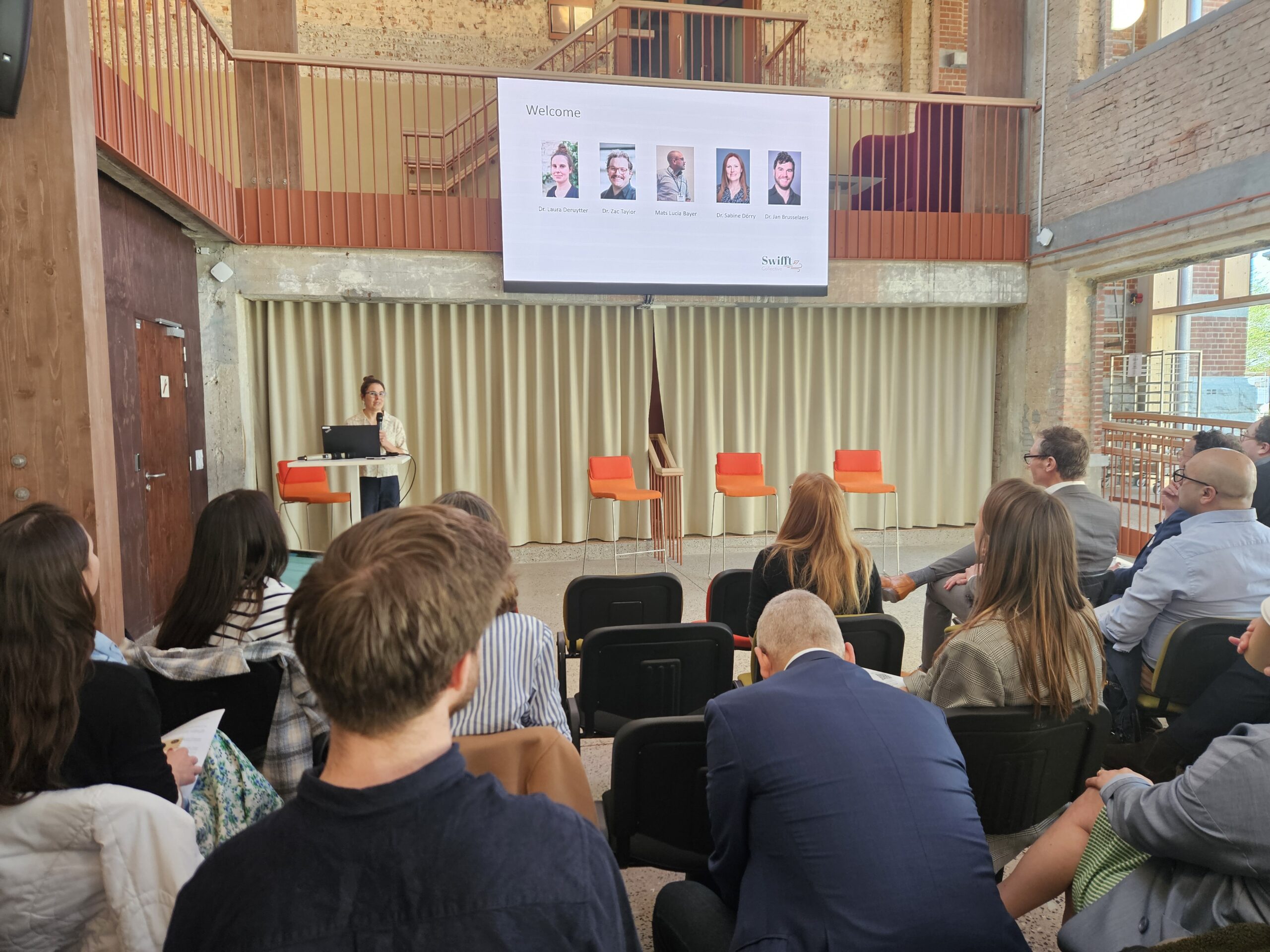
The seminar was organised by Dr Laura Deruytter (ULB & VUB, Swifft Chair in Decarbonisation and Finance), Dr Zac Taylor (TU Delft & Resilient Delta initiative), Mats Lucia Bayer (TU Delft), Dr Jan Brusselaers (VU Amsterdam Climate Finance Academy & University of Antwerp) and Dr Sabine Dörry (Luxembourg Institute of Socio-Economic Research).